The spare key.
Ben had changed his route home, his evenings, and most of his phone contacts. One small piece of brass still offered a way back.
An original, AI-assisted fictional story—not a real person’s testimony. Inspired by the episode below.
Published by Deepen Your Sobriety · A project by Chris
How our stories are made

Saturated x Deepen with Pastor Jonathan Pokluda
Deepen with Pastor Joby Martin · Episode aired September 19, 2026
Listen to this episodeAbout this story & its source
The full transcript of the official Church of Eleven22 episode video was reviewed through a third-party transcript service and checked against the publisher’s episode listing. The service did not identify whether captions were automated or publisher-authored; recognition errors may remain, and the audio was not independently checked. This is original, AI-assisted fiction, not testimony about Chris, Joby Martin, or an episode guest. No podcast dialogue is quoted.
For reflection and encouragement; this site does not provide counseling or treatment.
Uses your device voice. Keep this page open while listening.
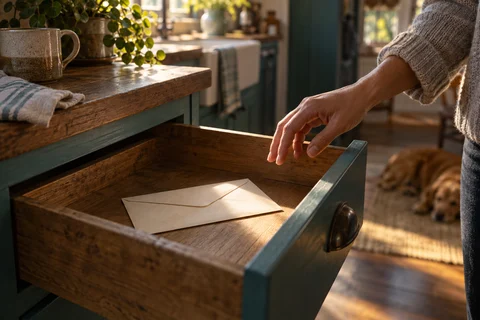
Ben found the key while looking for a battery. It was underneath a roll of tape in the kitchen drawer, where he had put it after treatment. He had not forgotten it was there. Forgetting was the explanation he planned to use if someone found it first.
It opened his friend Curtis's apartment. For years, Curtis had let him stay when things at home became difficult. There had always been a couch and someone willing to pour another drink before asking questions. Curtis was not a villain. He was a friend whose way of helping had become dangerous for Ben.
Ben had already changed a great deal. He attended appointments. He had stopped taking the road past his old bar. At church he knew when to stand, where the reading was, and how to answer when someone asked about grace. The key seemed too small to mention beside all of that.
The conversation with Jonathan Pokluda had pressed on the difference between knowing the language of faith and actually entrusting a life to Jesus. Ben was especially uncomfortable with the rich young ruler. He understood wanting to hear the answer while hoping the answer would leave one particular possession alone.
For Ben, the key held more than access to an apartment. It preserved an arrangement: if the new life became unbearable, he could leave without explaining himself. Someone would let him be angry. Nobody would ask about the appointment he had missed or the thing he was afraid to admit.
He set it beside his notebook and called Aaron, a man from his recovery group. He began by saying he wanted to return some property. Then he stopped making the errand sound tidy. He told Aaron why he had kept the key, and that part of him still wanted it.
Aaron did not ask for a grand promise. They talked about avoiding a visit to the apartment and returning the key by mail. Ben wrote Curtis a brief note: he appreciated the shelter Curtis had offered, but he needed a different plan when things got hard. He did not blame Curtis for decisions that had been his own.
Before sealing the envelope, he asked Aaron a question he had been embarrassed to bring to church. If he still wanted the way out, did that mean none of his faith was real? Aaron would not pronounce judgment on that. They returned to the episode's distinction: trust in Christ was not a prize for never feeling doubt. Ben could be honest about the conflict and take a responsible step within it.
They wrote a plan in the notebook for an evening when he wanted to leave: call someone, name the urge, and use the support arrangements he had made with his treatment team. Mailing a key could not do those things for him. He would still have to reach out.
At the post office, Ben waited behind a woman returning shoes. Nothing about the morning announced that it mattered. He paid for the envelope, kept the receipt, and called Aaron from outside. Later, when he opened the kitchen drawer, the tape had rolled into the space the key had occupied. He left the space alone.
In this episode
The episode challenges religious familiarity without whole-life trust. The rich young ruler illustrates costly surrender, while the discussion of assurance locates confidence in Christ's work and God's promises rather than personal goodness or the absence of doubt.
A connection for everyday life
Our fictional story examines a hidden fallback and one supported act of honesty. Returning a key does not earn salvation or guarantee sobriety; it makes a divided intention visible and opens a conversation about practical support.
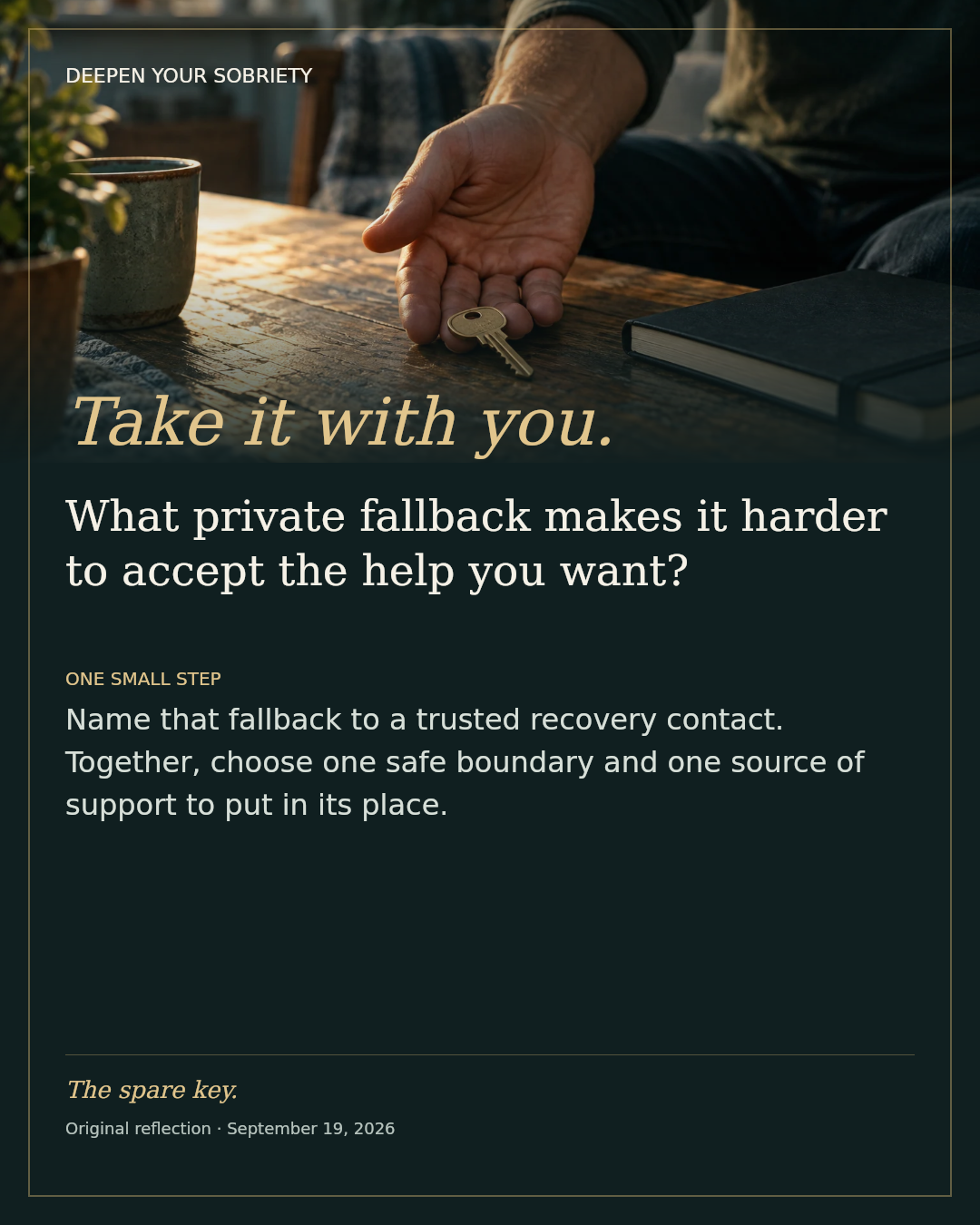
Take it with you.
Let the story become
one small step.
What private fallback makes it harder to accept the help you want?
Name that fallback to a trusted recovery contact. Together, choose one safe boundary and one source of support to put in its place.
Free 1080 × 1350 PNG. Save it to your phone or share it. Printable version · Browse all cards
If it opens as an image, use your browser’s Save Image option.
Deepen your connection.
Who came to mind while you were reading? Share this story with them—or simply let them know you’re thinking of them.
Deepen your faith with a Scripture reflection →Practical guide: your first recovery meeting →