
What this moment needs
1 Thessalonians 5:12–18 · Discernment, encouragement & patient care
An original, AI-assisted reflection from Deepen Your Sobriety · Published
Our editorial approach

Read 1 Thessalonians 5 in context, especially verses 12–18“We exhort you, brothers: Admonish the disorderly; encourage the faint-hearted; support the weak; be patient toward all.”
1 Thessalonians 5:14 · World English Bible, Classic edition (public domain)
Before we bring it into recovery
Paul is closing his first letter to the Thessalonian church with practical instructions for living together. In verses 12–18, he tells the community to live at peace, care for people according to what they need, refuse revenge, pursue what is good, pray, and give thanks. Verse 14 belongs inside that larger picture of shared life.
Our reflection
When someone you love is struggling, even a short text can take over an afternoon. You read it again, wonder what it means, and begin planning a response before you know what happened.
This verse gives more than one instruction because people do not always need the same thing. Sometimes care means naming what is wrong. Discouragement may call for a steady word. Weakness may call for practical help. Through all of it, Paul asks for patience.
“Admonish the disorderly” does not give us permission to shame or police another adult. It does leave room for honesty. You may need to name a broken agreement, refuse to hide a consequence, or say what you can safely do. Serious words can still be calm.
There are also times when correction is the wrong first response. Someone who already feels defeated may need to hear, “I’m glad you told me,” before talking about what comes next. Support can be ordinary. You might offer a ride to a meeting, sit nearby while a call is made, or help find professional care. The offer stays clear, and the other person remains responsible for the choice.
Patience does not require unlimited access to you. Boundaries still matter. Danger still needs an immediate response. Trust may take time to rebuild. You do not have to decide the whole future during one painful conversation.
You are allowed to need support, too. A family group, counselor, pastor, or trusted friend can help you sort out what belongs to you and what does not.
No response can guarantee another person’s recovery. Verse 14 asks us to pay attention before we act. What kind of care fits this person, in this moment? Tell the truth when truth is needed. Encourage someone who is losing heart. Offer help you can actually give. Be patient without giving up wisdom.
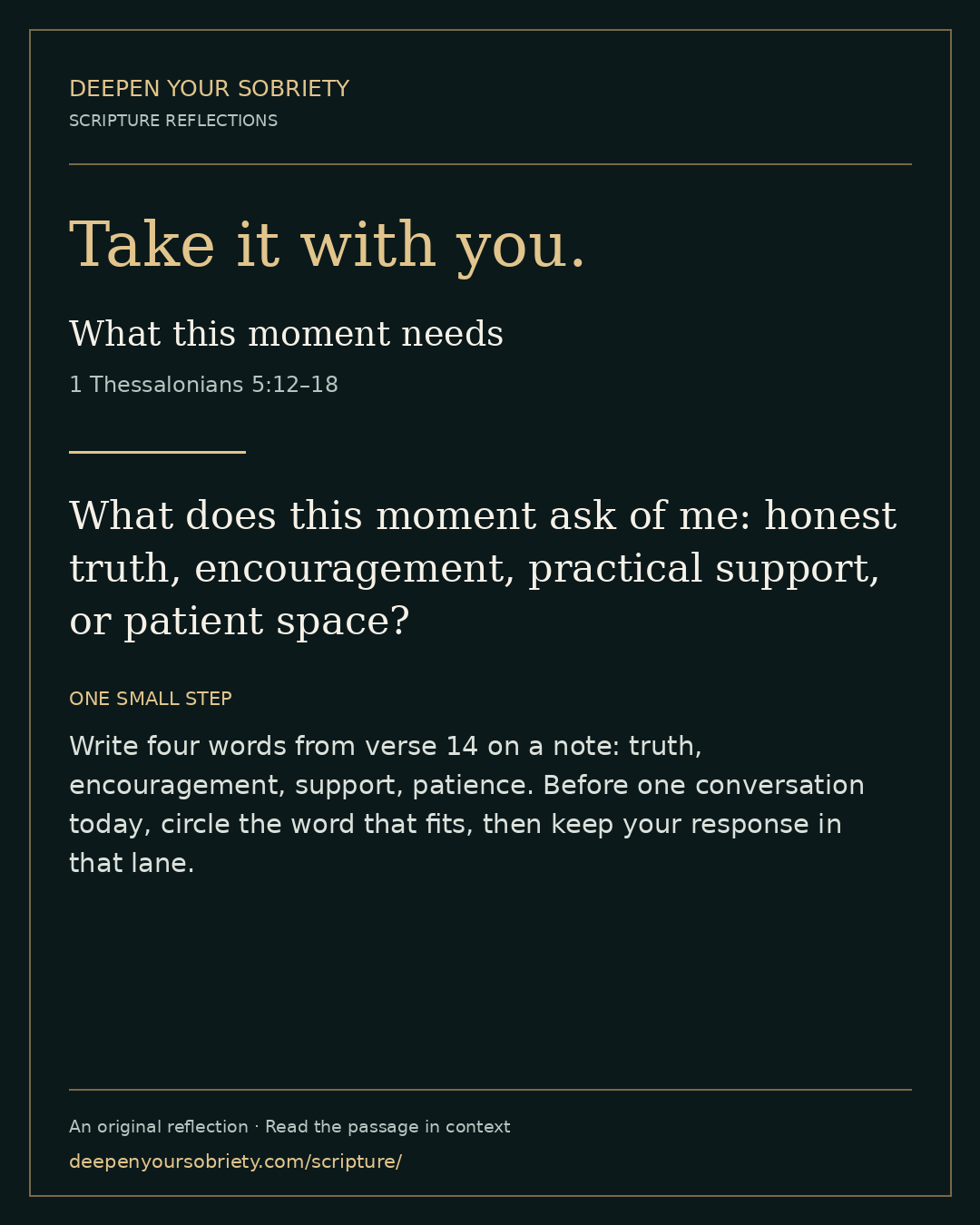
Take it with you.
What does this moment ask of me: honest truth, encouragement, practical support, or patient space?
One small step
Write four words from verse 14 on a note: truth, encouragement, support, patience. Before one conversation today, circle the word that fits, then keep your response in that lane.
A prayer, if you would like one
God, give me wisdom for this moment. Help me speak truth without contempt, encourage without making promises, offer help without taking over, and practice patience with both of us.
Deepen your care.
If this brought someone to mind, share it gently. You might say, “This helped me think about how I show up. No need to respond right away.”
A Christian reflection, not counseling or treatment. In an immediate U.S. crisis, call 988 or text 988. In immediate danger or a suspected overdose, call 911. These connections are our original editorial interpretation, not podcast teaching or statements from Joby Martin or The Church of Eleven22. This is not personal testimony or a claim of clinical or pastoral review. Questions and different readings are welcome. Send a private reflection or correction.