
Before you try to fix it
Romans 12:9–18 · Presence, empathy & asking what helps
An original, AI-assisted reflection from Deepen Your Sobriety · Published
Our editorial approach

Read Romans 12 in context, especially verses 9–18“Rejoice with those who rejoice. Weep with those who weep.”
Romans 12:15 · World English Bible, Classic edition (public domain)
Before we bring it into recovery
Paul is writing to a Christian community about sincere love in practice. These verses move through honor, patience, prayer, hospitality, empathy, humility, and peace. “Weep with those who weep” belongs to that wider life together. It is not a command to manufacture a feeling or solve another person’s sorrow; it invites us to meet people where they actually are.
Our reflection
Someone you love tells you the meeting was hard. Or that the craving came back. Or that they are tired of being asked whether they are okay. Before the sentence is finished, your mind is already building a plan.
The impulse may come from love. You want the danger farther away. You want the next choice to be better than the last one. You may also want relief from the helplessness of watching someone you care about struggle.
Our application of Romans begins with a smaller invitation: stay with what the person has said before deciding what the moment should become. Rejoicing and weeping are forms of presence. They do not rush past another person’s experience to reach advice.
Presence is not passivity. There are times to help find a meeting, arrange a safe ride, call a professional, or act quickly in an emergency. But many conversations become clearer when we first ask, “Would you like me to listen, help you think this through, or help you find support?” That question leaves room for the person in front of us to name what would be useful.
It also leaves room for honesty about our own limits. You may be able to listen for ten minutes and still be unable to lend money, cover a consequence, keep a dangerous secret, or stay in a threatening situation. Empathy and boundaries can sit at the same table. Support for family and friends can help you tell the difference between loving presence and taking responsibility for another adult’s recovery.
If the first thing out of your mouth was advice, you have not failed at love or faith. You can pause and try again: “I moved too quickly. What is this like for you?” Repair can begin without pretending you will always respond perfectly.
Before you try to fix it, see whether this moment is asking you to help, to listen, or simply to remain near.
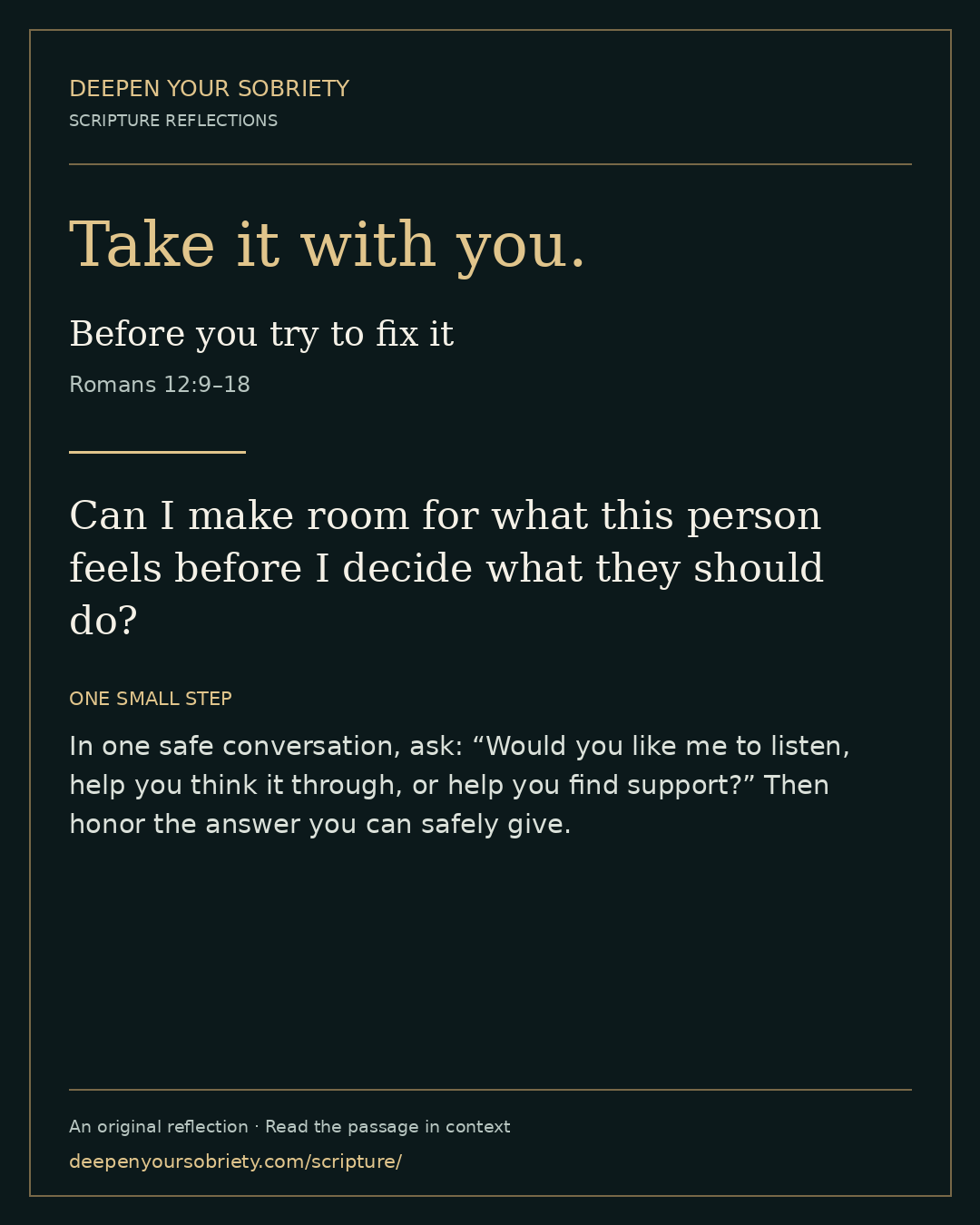
Take it with you.
Can I make room for what this person feels before I decide what they should do?
One small step
In one safe conversation, ask: “Would you like me to listen, help you think it through, or help you find support?” Then honor the answer you can safely give.
A prayer, if you would like one
God, slow me down enough to see the person before the problem. Give me wisdom to listen, courage to help when help is needed, and honesty about what is not mine to carry.
Deepen your connection.
Who came to mind as you read? Share this reflection as an offer of companionship, not a message about what they should do.
A Christian reflection, not counseling or treatment. In immediate danger or a suspected overdose, call 911 in the U.S. These connections are our editorial interpretation, not statements from Joby Martin or The Church of Eleven22. This is not personal testimony or a claim of clinical or pastoral review. Questions and different readings are welcome. Send a private reflection or correction.