
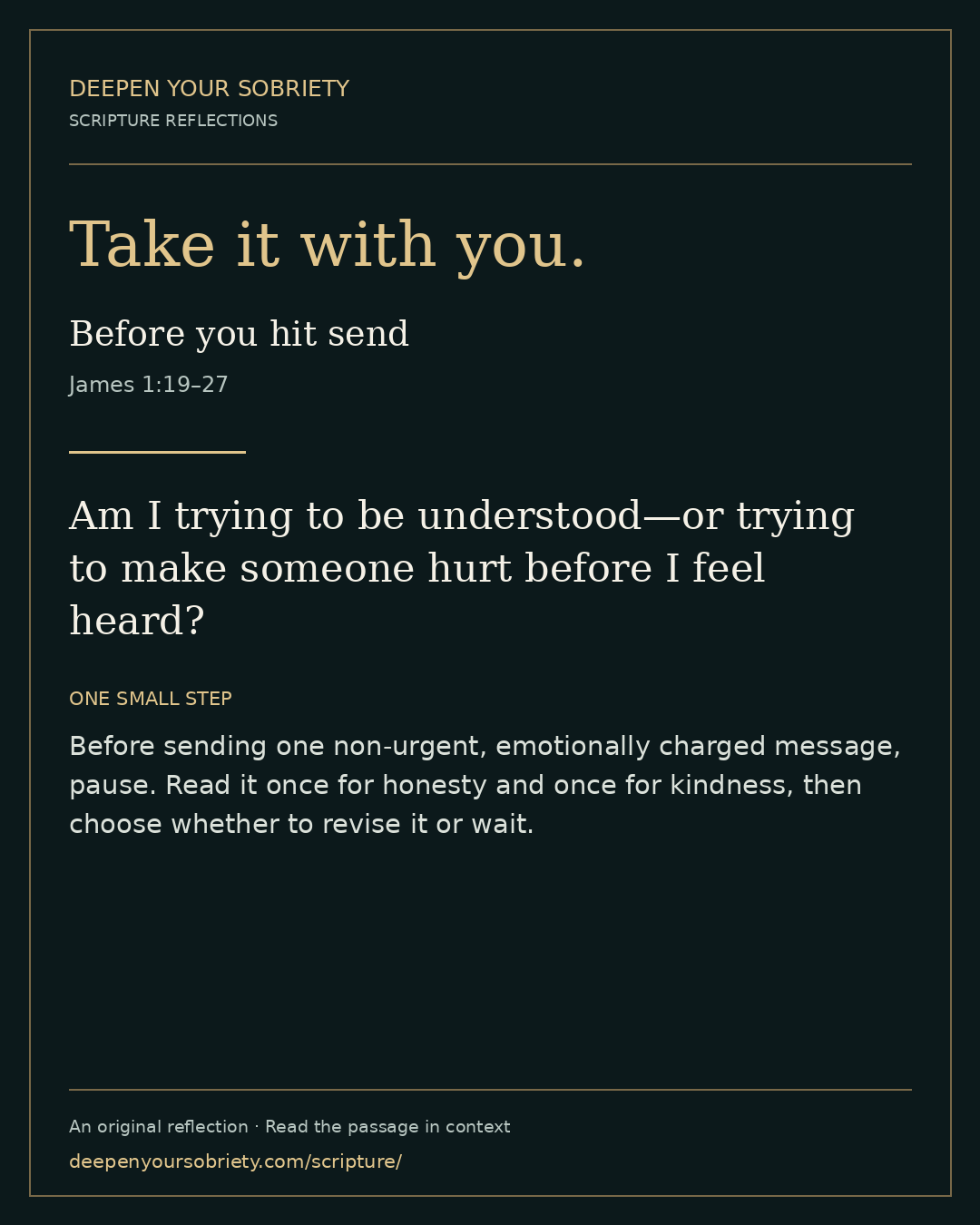
Before you hit send
James 1:19–27 · Listening, anger & the next honest response
An original, AI-assisted reflection from Deepen Your Sobriety · Published
Our editorial approach

Read James 1 in context, especially verses 19–27“let every man be swift to hear, slow to speak, and slow to anger”
James 1:19, excerpt · World English Bible, Classic edition (public domain)
Before we bring it into recovery
James writes to a community of believers, calling them to receive God’s word humbly and put it into practice. The instructions about hearing, speech, and anger lead into a warning against hearing without doing. The chapter then connects faith with care for vulnerable people. This is a call to a lived response, not simply a technique for winning an argument.
Our reflection
The reply is already written. You have corrected the facts, supplied the missing history, and found the sentence that will make the other person feel what you felt. Your thumb waits above the screen. There is still time to choose what happens next.
In recovery, the work can reach into moments that have nothing obvious to do with a drink or a substance. What do we do with the urge to be understood immediately? Can we hear another person’s words without using the pause between them to reload our answer?
Our application of James begins there: make room to listen before deciding how to respond. That is different from pretending a hurt did not happen. Anger can tell us something needs attention; it does not have to write the whole message. A response can be truthful without being designed to wound.
For someone who loves a person in recovery, listening does not mean surrendering a boundary or agreeing with everything said. It might mean asking, “Have I understood you correctly?” before explaining what you can and cannot offer. Being heard and getting one’s way are not the same thing.
The passage also asks for action. We can admire a verse about patience and still send the message we know is meant to punish. A small practice might be leaving a non-urgent reply unsent, returning to it later, and replacing an accusation with a specific, honest request. If a conversation needs help, a trusted support person or counselor can be part of that next step.
Not every conversation is safe to continue. This reflection is not an instruction to stay quiet about abuse, delay urgent help, or make yourself available to someone threatening you. Nor is a sharp response proof that you have failed at recovery or faith. Where it is safe, there may be room for repair: name what you said, take responsibility, and try again without demanding immediate forgiveness.
Before you hit send, there is a small space. You can use it to ask what you want your words to do.
Take it with you.
Am I trying to be understood—or trying to make someone hurt before I feel heard?
One small step
Before sending one non-urgent, emotionally charged message, pause. Read it once for honesty and once for kindness, then choose whether to revise it or wait.
A prayer, if you would like one
God, help me listen without disappearing and speak without trying to wound. Give me the courage to tell the truth, seek support, and put what I hear into practice.
Deepen your connection.
Who came to mind as you read? Share this reflection as an invitation, not a correction aimed at someone else.
A Christian reflection, not counseling or treatment. These connections are our editorial interpretation, not statements from Joby Martin or The Church of Eleven22. This is not personal testimony or a claim of clinical or pastoral review. Questions and different readings are welcome. Send a private reflection or correction.